Response to Miranda’s Post
Hi Miranda! Your blog post about barriers to learning and the value of Universal Design for Learning was great! I appreciated how your example of your Interpersonal Relationships class clarified the ways that UDL is applicable to your own learning. I also found your connection between Inclusive Learning and Vygotsky’s Zone of Proximal Development interesting — I hadn’t thought of it that way before. In your discussion of Tjahjana’s 2023 paper, I wonder if you could include some ways that to foster a sense of community in a fully asynchronous course like this one, where there are no synchronous or in person meetings? Best of luck with the semester!
Response to Simon’s Post
Hi Simon! I loved reading your blog post about designing for inclusion and diversity. I enjoyed that you started off your post by personally acknowledging feedback from both us and our instructor. I also appreciated your discussion of barriers to learning, and how you made your points clear by including a screenshot of the lecture slide. I liked your example of your CSC 466 project being open-ended, but I wonder what your thoughts are about the multiple means of expression making assignments too open, which might lead to learners struggling to pick a project to do? Best of luck in the rest of the semester!
Reponse to Larissa’s Post
Hi Larissa! I enjoyed reading your blog post about designing for inclusion and engagement. I appreciated how clearly you applied the concepts to microbiology, especially through your use of tables. I also found your insight about Dr. Terence Brady’s TED talk interesting, and I agree with your point about how we should be proactive in our approach to designing. In your discussion about motivation and engagement, I wonder if you could expand more about how constructive alignment strategies and motivation interact? Best of luck with your semester!
Designing for Inclusion and Engagement
Illustration by Karacis Studio on Unsplash
Universal Design for Learning
Universal Design for Learning (UDL) is all about planning with the diversity of learners in mind. Rather than creating one “standard” lesson and adjusting later, UDL encourages educators to anticipate learner variability while we plan lessons. I think this approach is essential because every student learns differently, whether it’s different paces, preferring different media, or differing environmental factors. Designing flexible learning experiences allows us to remove barriers for students before they appear.
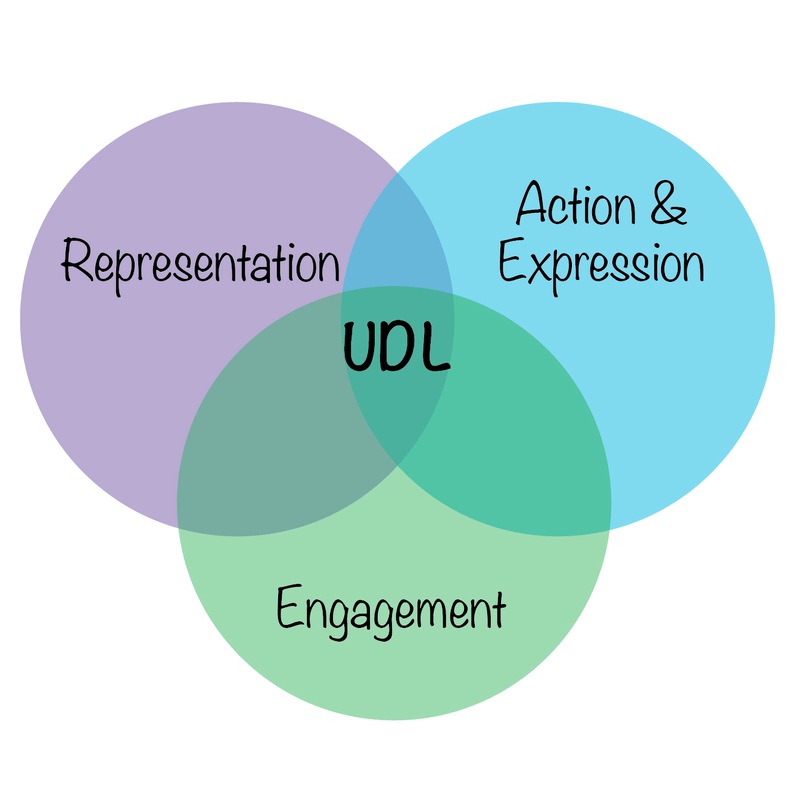
An example of UDL that stands out to me from my experience is how one of my psychology professors ensures that lecture material is recorded, as well as making sure the slides are posted before class. Him taking this initiative showed me how proactive design can make a major difference in engagement and accessibility. It is a lifesaver to be able to go back and watch lectures when I get sick, and to have the slides available before class so that I can record notes on top of them. Also, when the content is presented through multiple means, such as visual slides, audio recordings, and interactive materials (like in-class polling through something like iClicker), it makes the learning experience more accessible and enjoyable.
This video gives a quick overview and example of universal design for learning.
Inclusive Learning Design
Inclusive design builds on UDL by emphasizing equity, belonging, and representation. It’s not just about accessibility, but also about making sure every learner feels that their identity and perspective are valued. In practice, this could mean integrating diverse examples in class, providing culturally diverse materials, and offering students a voice in how they demonstrate understanding. For example, I’ve seen an inclusive approach in my Grade 4 class, where my teacher asked us all to share what we were having for lunch. Though it wasn’t specifically about learning, this approach fostered an inclusive environment where my classmates of all ethnic groups shared stories about our diverse meals with one another. Because of this, we appreciated each others’ cultures more, and felt more included in the classroom. This approach reminds me that inclusion goes beyond including minority perspectives in our curricula, it also encompasses classroom culture and environment.

Synchronous and Asynchronous Learning
Balancing synchronous and asynchronous learning is a key component of engagement. This study by Fabriz et al. (2021) highlights some of the relationships between online learning during COVID and student outcomes. I found it interesting that this study found that “students in synchronous settings report a more positive learning experience as well as greater support of their basic psychological needs” (Fabriz et al., 2021). For me, synchronous activities foster more connection with both my teacher/professor and classmates, while asynchronous options don’t have that benefit. Conversely, asynchronous activities do offer flexibility for students who may have busy schedules, different learning preferences, or accessibility needs. I think that different learning environments call for a different balance between the two. In my Grade 10 French class, which was cut short due to COVID, we were mostly doing synchronous classes, where we would have to speak in French during class over Zoom. Though I wasn’t terrible at French, it was an incredibly awkward experience to have to speak in an online class directly to the teacher, while everyone else could also hear you. In this case, I much preferred the asynchronous worksheets, quizzes and audio recording assignments that we did.
Principles of Effective Online Education
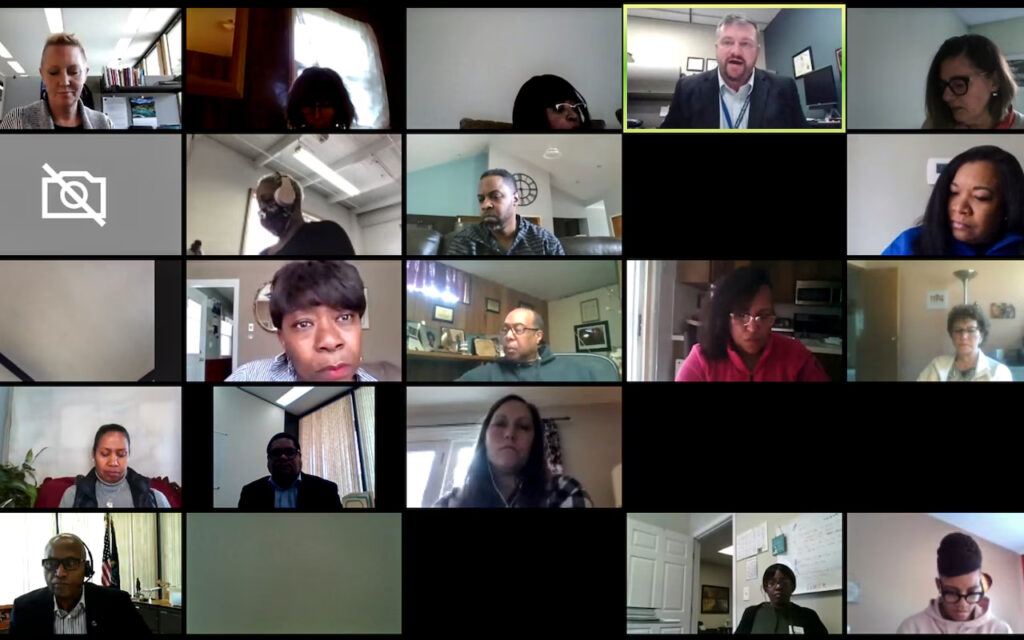
Effective online learning depends on clear organization and expectations, as well as having learning objectives that line up with assessments and activities. Frameworks like UDL help educators achieve this by being inclusive from the start, in hopes of implementing strategies to remove barriers for students while designing the course. I also think that effective online education provides ample resources for students, whether that is an available instructor or TA, or helpful videos and slideshows.
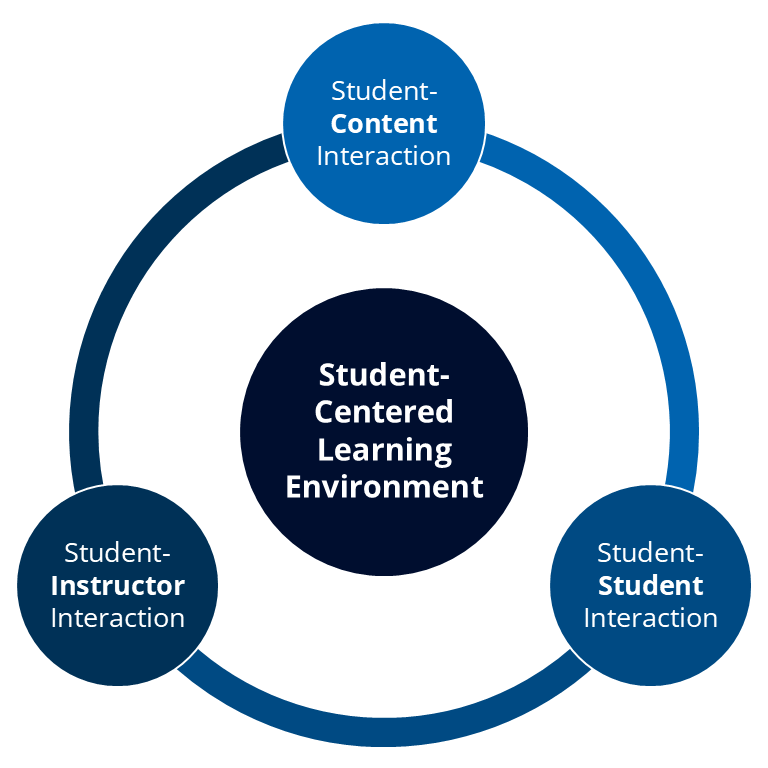
From my perspective, online courses that are set up like this feel more cohesive and motivating. When I know exactly what I am working towards, and when materials are easily accessible, it helps reduce the stress of “What assignment is due this week? When is my next quiz?’, and allows me to instead focus on the actual content. These student-content, -student, and -teacher interactions are all vital for creating an online learning environment that is actually motivating and engaging.
Response to Anna’s Post
Hi Anna! I enjoyed reading about your insights about backward design, as well as empathy’s role in design and the spiral model of learning. I agree with your thoughts about how starting with the “why” of learning was powerful for your grade 4 students’ diorama project – I find that to be true for both my teaching and my learning experience. I found the spiral model of learning interesting, since that’s something I haven’t heard of before. I wonder if you could add a little bit more about that topic to clarify, or another resource that the reader could use? I’m looking forward to reading your third blog post, and I wish you luck in the rest of the term!
Response to Kynan’s Post
Hi Kynan! I enjoyed reading your second blog post. I agree with your point about how learning becomes much more motivating when you have an end goal in mind, like your example about creating a video game in C#. I also found your point about design thinking for software engineering interesting. I wonder if next time you would be able to include an example of how implementing design thinking shifts away from simple information delivery in your blog next time? I’m looking forward to reading your third blog post, and I wish you luck with the rest of the semester!


Forwards or Backwards Learning Design?
Photo by Iewek Gnos on Unsplash
Backward Design and Understanding by Design (UbD)
Wiggins & McTighe’s idea of backward design is a way of planning education that begins with introducing the end goal. This approach is valuable because it allows students to see what exactly they need to understand, and it also provides space for them to explore different approaches to fulfill their desired learning objective. An example of this from my own learning experience has been in a research seminar here at UVic, PSYC 492, where we had very clear learning objectives. We were to study and discuss electroencephalography (EEG) techniques, accurately reproduce them in a lab environment, and then analyze, interpret and present our findings. The backwards design of this course syllabus was necessary, because it was a three and a half week accelerated summer course – without proper design, we would not have had a successful seminar.
Design thinking is another interesting framework that I hadn’t heard about before our discussion of it in Module 2. Reflecting on a prior experience I’ve had, design thinking definitely played a role in a more successful solution to a problem; I’ve noticed that during busy travel weekends, there will be extra buses or double-decker buses added to routes that normally don’t have them. Applying this framework makes a better solution to the problem – with more buses, more people were able to address their need of efficient public transport. I’ve noticed this design thinking approach applied to the 70 to Swartz Bay, as well as on some routes in Vancouver.

Photo from Wikipedia
Learning Outcomes and Bloom’s Taxonomy
We discussed both Bloom’s Taxonomy and SOLO Taxonomy in Module 2, but I found that Bloom’s Taxonomy resonated better with me. I find this framework more helpful because I’ve inadvertently applied it to my own experience as a math tutor. When I assign a student a project or assessment and describe it weak verbs, or if the textbook/workbook they’re learning from use the same weak verbs, I’ve noticed that they do not seem as motivated to work, nor do they seem to understand the material on a deep level. On the other hand, when I their teachers assign them a project with a rubric that uses strong verbs, they are much more focused and ready to learn.
Better Learning Design
In some of my courses, I’ve found that surface-level learning was good enough to get an A in the class. Without effective learning objective design to get students thinking, there was no reason for us to do anything more than memorize the content and regurgitate it on exams. As a result, I could not recall much at all about these courses after the final exam, because I was just cramming for the test, rather than to learn. Though I might have gotten the grade I wanted, I left the semester feeling like I didn’t gain any knowledge from the class.
Inquiry and Project-Based Learning
I see inquiry and project-based learning at the core of my professional interest, because I want to pursue a career in psychology research. At the heart of all research is some kind of inquiry, which usually turns into collaboration and a drive to solve a specific problem. As an example, here is a research podcast I did with my friend for a psychology class:
When applying this to education, I could see the biggest benefit to designing open-ended questions and projects being that students (and researchers) get to explore the things that they want to. An intrinsic drive to learn about something would lead to a much more authentic project. Conversely, a challenge to this approach could be keeping students on track and on topic, as well as making the grading system fair For example, how do you mark a podcast, vs a written paper, vs a poster, if they’re all supposed to be worth the same percentage of a student’s grade?
Response to Anthony’s Post
Hi Anthony! I loved reading your blog post introducing you and your learning journey. I appreciated your honesty about how it was overwhelming at first at your summer internship, but you managed to equip yourself with the tools you needed to learn the way you learn best. I also found it interesting that confidence is the strongest factor in the ARCS model of motivation for you, because from the one computer science class I took (for my Psychology degree), I felt the same way! I had never programmed before and it gave me the most intrinsic motivation when I was confident about my progress. I wonder if you could go more in depth about how you have found navigating the technology for this class? I’d love to hear your thoughts about Mattermost and WordPress. I’m excited to learn with you this semester!
Response to Neeraj’s Post
Hi Neeraj! I enjoyed reading your blog post about what learning means to you. As a fellow psychology student, I appreciated how you linked learning theories like Vygotsky’s with your understanding of learning, as well as how you discussed relevance being your driving factor for motivation. I wonder if next time you would be able to expand a bit more about your prior knowledge and how it affects your learning now? I’m looking forward to the rest of the semester with you!
Response to Harwin’s Post
Hi Harwin! I appreciated hearing your story about your learning journey. Your points about learning through projects and taking the reins for your own career resonated a lot with me. Job security and figuring out what to do after graduating seems to be almost a universal struggle for us students, so I’m glad to hear your perspective on it. I wonder if you would be able to go deeper in to some of the computer-science “jargon” in a future post? I would love to learn more about how your prior experience with JavaScript helped you with React. I’m excited to see how this course shapes your learning throughout the rest of the semester and your future career!